Development
6 min read
April 18, 2026
Designing timeless digital experiences
Minimal digital experiences are built through thoughtful typography, purposeful whitespace, refined imagery, and fast performance rather than visual complexity.

Trends come and go, but timeless digital experiences remain relevant because they prioritize clarity over decoration. The most memorable websites often feel effortless—not because they lack complexity, but because every decision has been carefully considered.
In architecture, every material serves a purpose. Digital products should follow the same philosophy. Every layout, interaction, image, and transition should contribute to a single, cohesive experience.
1) Start with restraint, not decoration
Minimalism is often misunderstood as simply removing elements. In reality, it is about intentionally choosing what deserves attention. Generous spacing, balanced layouts, and clean compositions allow users to focus naturally without distraction.
When every visual element has a purpose, interfaces become easier to understand and more enjoyable to explore.
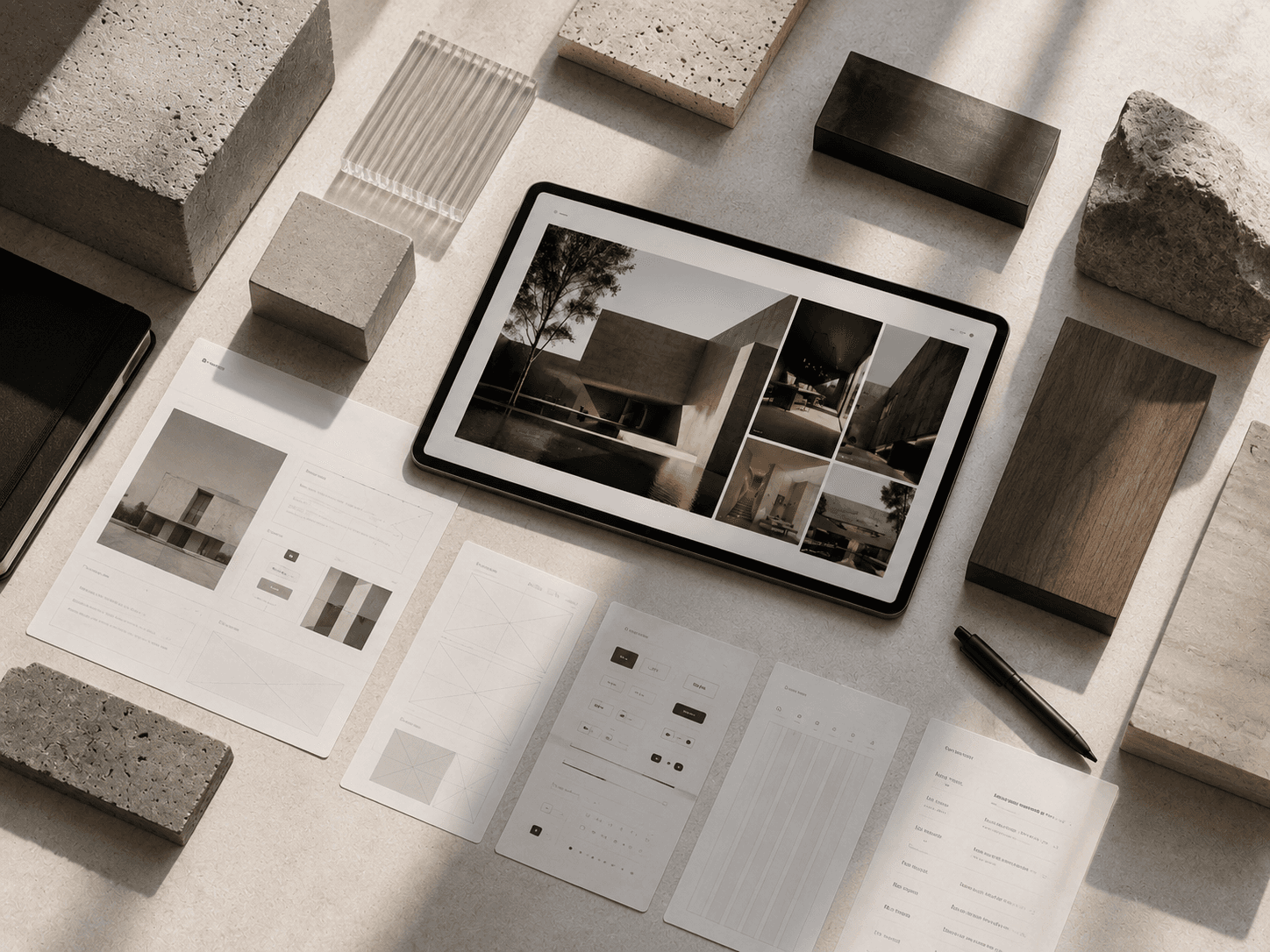
2) Typography shapes the experience
Typography does far more than display information. It establishes rhythm, hierarchy, and personality across the entire interface. Elegant type combined with thoughtful spacing creates an atmosphere that feels calm, premium, and timeless.
Rather than competing with imagery, typography should complement it and guide readers naturally through every section.
3) Let photography become the interface
High-quality photography can communicate emotion faster than paragraphs of text. Architectural imagery, natural lighting, material textures, and strong compositions create visual stories that immediately establish trust and quality.
Instead of treating images as decoration, they should become an essential part of the user experience and reinforce the overall design language.

4) Performance is part of luxury
Luxury experiences should never feel slow. Smooth interactions, optimized assets, responsive layouts, and thoughtful motion contribute just as much to the experience as beautiful visuals.
Fast-loading websites respect users' time while allowing the design to feel effortless across every device.
5) Key takeaways
Remove distractions before adding new elements.
Use typography to establish hierarchy and rhythm.
Allow imagery to communicate emotion naturally.
Prioritize performance alongside aesthetics.
Design for longevity instead of trends.
6) Conclusion
Timeless digital experiences are built through discipline rather than excess. When typography, imagery, spacing, and performance work together, the result is a product that feels calm, elegant, and memorable long after design trends have changed.

